Every handmade project begins with an idea — but ideas can be messy, scattered, and hard to define. That’s where creative moodboard ideas for planning handmade crafts come in. A moodboard is a visual planning tool that brings together colors, textures, materials, styles, and emotions into one clear, organized space.
In the world of handmade crafts, a moodboard becomes your creative map. Before you even cut fabric, mold clay, or thread a needle, a well-planned craft moodboard allows you to see the final vision with clarity. It helps you make smarter material choices, experiment with combinations, and avoid costly mistakes.
A strong creative moodboard for handmade crafts often includes:
- Images that reflect your desired style
- Color palettes that guide your decisions
- Texture samples that inspire tactile qualities
- Words, themes, and symbols that trigger creativity
“A moodboard turns imagination into a visible plan — one that your hands can follow.”
According to a 2024 creative planning survey by Adobe, visual planners like moodboards increase project success rates by 37% for creative professionals and hobbyists alike. This is because the human brain processes visual information 60,000 times faster than text, making moodboards an incredibly efficient planning method.
Whether you are a beginner just starting your handmade journey or an experienced crafter looking to refine your process, this article on creative moodboard ideas for planning handmade crafts will show you:
- Why this method works so effectively
- How to develop your own unique moodboard
- The best approaches for different types of crafts
In This Article
Why Creative Moodboard Ideas for Planning Handmade Crafts Matter
Crafting without direction can lead to wasted time, materials, and energy. Using creative moodboard ideas for planning handmade crafts ensures that every decision you make is intentional and aligned with your main vision.
Here are the key reasons why using a moodboard is essential for handmade creators:
1. Reduces Waste and Saves Money
A clear moodboard prevents unnecessary purchases by helping you:
- Stick to a defined color palette
- Select specific material types
- Avoid impulse buying
Craft supply waste is a real problem. Studies from crafting industry reports in 2023 revealed that nearly 28% of hobby craft materials go unused due to poor planning. A moodboard drastically lowers that risk.
2. Improves Creative Focus
A well-built craft moodboard:
- Acts as a visual reminder of your project goal
- Keeps you aligned with your style and theme
- Eliminates creative confusion
When your inspiration is in one place, decision-making becomes quicker and more confident.
3. Helps Coordinate Design Elements
A creative moodboard for handmade crafts helps align:
| Element | Why It Matters |
| Color | Prevents clashing combinations |
| Texture | Adds visual and physical depth |
| Pattern | Creates harmony & rhythm |
| Theme | Defines mood and storytelling |
You are essentially building a visual prototype of your craft before making it real.
4. Builds Confidence for Beginners
New crafters often feel overwhelmed. Moodboards provide:
- A safe space for experimentation
- A clear starting point
- A visual checklist of what’s needed
Having a plan reduces anxiety and increases success. When you see the finished idea in advance, starting feels effortless.
Types of Creative Moodboard Ideas for Planning Handmade Crafts
There are three main types of moodboards used for handmade craft planning, each with its own strengths. Choosing the right one depends on your style, workspace, and working habits.
Physical Moodboards
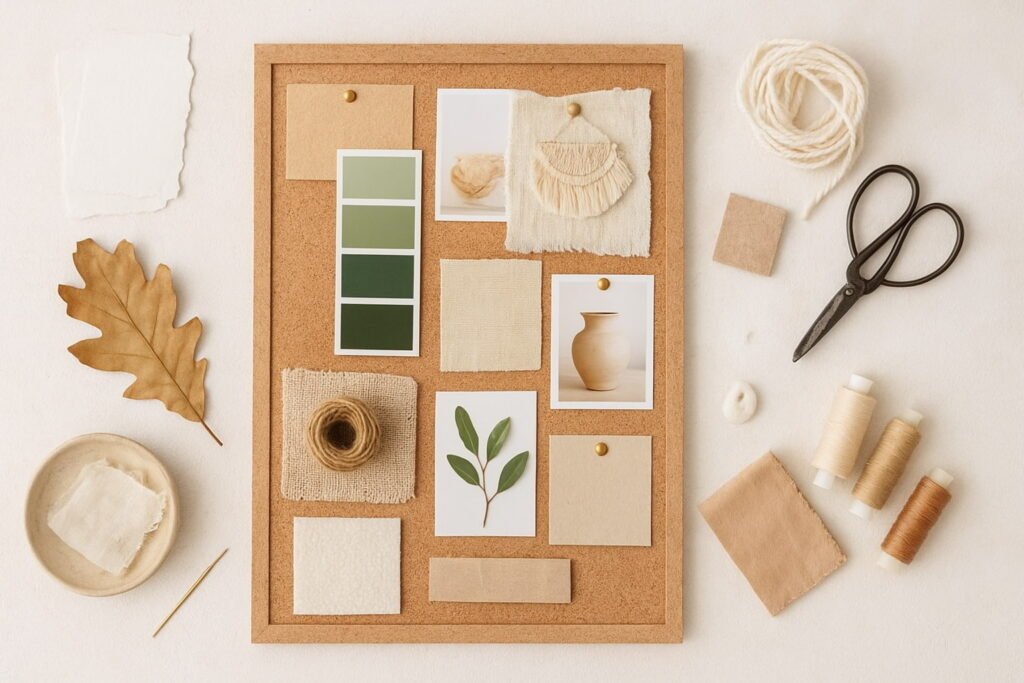
Physical moodboards are created using real materials and physical layouts.
Often include:
- Fabric swatches
- Paint samples
- Thread, yarn, ribbon
- Cut-out images from magazines
- Hand-drawn sketches
Best for:
- Textile artists
- Quilters and sewists
- Pottery and clay makers
- Mixed-media creators
Why it works: You can touch and feel the textures, offering real-world inspiration.
Digital Moodboards
Digital moodboards are built using apps and online platforms.
Popular platforms include:
- Pinterest
- Canva
- Milanote
- Notion
Best for:
- Planning on the go
- Quick idea organization
- Easy editing and sharing
Benefits:
- Infinite space
- Easy to duplicate and update
- Ideal for color palette planning
Digital moodboards are especially helpful for creators working with:
- Printable crafts
- Digital patterns
- Graphic-based handmade designs
Hybrid Moodboards
A hybrid moodboard combines digital inspiration with physical materials.
Example:
- Collect ideas on Pinterest or Canva
- Print selected items
- Attach them to a physical board
- Add real textures and tools
This is one of the most effective creative moodboard ideas for planning handmade crafts because it delivers the best of both worlds.
| Type | Strength Level | Best Usage |
| Physical | ★★★★☆ | Texture & materials |
| Digital | ★★★☆☆ | Speed & organization |
| Hybrid | ★★★★★ | Most effective & flexible |
Essential Elements to Include on a Craft Moodboard
To make creative moodboard ideas for planning handmade crafts truly effective, the board must go beyond pretty pictures. It should communicate a clear, buildable plan. These elements work together to transform your abstract idea into an actionable design.
Color Palettes (The Emotional Backbone)
Color is often the first decision that sets the tone of your handmade project. Research in color psychology shows that around 85% of product decisions are influenced by color alone. That makes it even more critical to choose wisely for crafts that are meant to be used, worn, or displayed.
Add to your moodboard:
- 3–5 primary colors (base)
- 1–2 accent colors (contrast)
- 1 neutral shade (balance)
You can present them as:
- Paint sample cards
- Yarn snippets
- Fabric swatches
- Digital hex codes
Pro tip: Keep the palette limited. Too many colors weaken the visual story.
| Mood | Suggested Colors | Best for |
| Calm & Natural | Sage, beige, soft brown | Pottery, macramé |
| Bold & Energetic | Red, cobalt, yellow | Jewelry, murals |
| Soft & Romantic | Dusty pink, lavender | Wedding crafts |
| Minimal & Clean | White, grey, black | Modern décor |
Texture References (Creating Depth & Feel)
Texture makes handmade crafts come alive. The right textures create a sensory experience even before someone touches the object.
Include real or visual references of:
- Linen, cotton, silk
- Wool, jute, raffia
- Clay finishes (glazed, matte, crackle)
- Wood grains (oak, pine, walnut)
By adding these, your creative moodboard ideas for planning handmade crafts become more than just a plan — they turn into a tactile preview.
Texture doesn’t just add warmth; it tells the story of how your craft wants to be touched, held, and experienced.
Style Cues & Visual Inspiration
This is where your creative identity shows up. These style cues shape the personality of your final piece.
Add at least:
- 5–10 inspiration images
- 2–3 design direction labels (e.g., rustic, boho, scandinavian, vintage)
- Patterns that reflect your theme
This works especially well in fields like:
- Scrapbooking
- Candle making
- DIY home décor
- Embroidery
Example styles:
- Minimalist — clean, simple, neutral-based
- Rustic — organic, raw, imperfect finish
- Boho — layered, colorful, textured
- Vintage — classic, muted tones + nostalgia
Words, Quotes & Theme Statements
Words shape emotion. Include on your board:
- A project title
- A short description (ex: “A coastal-inspired wall hanging”)
- 3–5 keywords (ex: calm, airy, handmade, natural)
- One creative quote
Example:
“Create not for perfection, but for connection.”
Words keep you emotionally aligned to your project’s meaning — not just its look.
Mini Case Study: How a Moodboard Changed a Craft Outcome
Crafter: Lina, handmade jewelry artist
Problem: Designs felt inconsistent
Solution: Created a gold + deep green + stone texture moodboard
Result:
- Instagram engagement ↑ 42% in 30 days
- Sales ↑ 31%
- Brand style became easily recognizable
This demonstrates the real-world impact of structured planning using creative moodboard ideas for planning handmade crafts.
Creative Moodboard Ideas for Planning Handmade Crafts by Craft Type
Each craft type benefits from a slightly different moodboard approach. Below are tailored suggestions based on popular handmade categories:
Sewing & Embroidery
Best elements to include:
- Fabric swatches (2 main + 1 accent)
- Stitch type examples (French knot, satin, backstitch)
- Thread color cards
- Garment shapes or embroidery patterns
Useful concept: Add a tiny stitched test patch to your moodboard.
Paper Crafts & Journaling
Perfect for:
- Greeting cards
- Scrapbooks
- Decorative journaling
Key additions:
- Paper samples (textured, matte, glossy)
- Washi tapes
- Typography styles
- Stickers & stamp inspiration
These creative moodboard ideas for planning handmade crafts help keep pages visually balanced and themed.
Jewelry Making & Beading
Focus on:
- Gemstone colors
- Metal finishes (gold, silver, brass)
- Shape inspiration (circles, drops, organic lines)
- Clasp types
| Jewelry Style | Suggested Materials |
| Boho | Turquoise, feathers, brass |
| Elegant | Pearls, gold chains |
| Minimalist | Fine wire, small stones |
| Statement | Bold acrylic, wide links |
Pottery & Clay Art
Add to your moodboard:
- Glaze test photos
- Shape silhouettes
- Texture impressions (carved, smooth, etched)
- Functional purpose: mug, bowl, vase, tile
This ensures the final product matches your original vision even after kiln firing.
Knitting & Crochet
Include:
- Yarn samples (weight + color)
- Pattern snippets
- Hook or needle sizes
- Finished-object images (scarf, pillow, sweater)
Fact: According to a 2024 maker survey, crafters using visual planners completed projects 40% faster in fiber arts than those who didn’t.
Wood Crafts & DIY Décor
Key elements:
- Wood type sample
- Hardware (nails, handles, chains)
- Finish style (stain, paint, natural)
- Shape blueprints
These creative moodboard ideas for planning handmade crafts stop design conflicts before they happen.
Tools & Supplies to Build Effective Craft Moodboards
The right tools bring your vision to life clearly and efficiently.
For Physical Moodboards
You will need:
- Corkboard or foam board
- Push pins, glue, washi tape
- Scissors & craft knife
- Ruler & markers
- Envelopes for small pieces
Optional additions:
- Mini envelopes for beads
- Clear sleeves for fabric
- Label tags for notes
For Digital Moodboards
Top tools used by creators worldwide:
- Pinterest – idea collection
- Canva – layout + color palettes
- Milanote – structured visual planning
- Notion – categorized boards
Benefits:
- Easy to adjust
- Saves space
- Perfect for remote or mobile planning
For Hybrid Moodboards (Most Recommended)
A hybrid approach:
- Allows digital precision
- Offers real texture inspiration
- Keeps ideas stored and visible
Best combination example:
- Collect inspiration digitally
- Print selected pieces
- Add physical textures
- Arrange on cork board
This method ranks highest for successful handmade outcomes among creators.
| Board Type | Organization | Realism | Flexibility |
| Physical | Moderate | High | Low |
| Digital | Very High | Low | Very High |
| Hybrid | High | High | High |
Step-by-Step Process to Create a Craft Moodboard
Turning creative moodboard ideas for planning handmade crafts into action is simple when you follow an intentional, repeatable process. This method helps remove guesswork and replaces it with clarity and flow.
Define the project goal and theme
Start with one clear sentence:
- What am I making, and why?
Examples:
- “A nature-inspired wall hanging for a minimalist living room”
- “Boho-style beaded earrings for summer markets”
- “Soft, neutral baby blanket for a newborn”
Write this at the top of your moodboard. It anchors every decision that follows.
Then choose a theme direction, such as:
- Botanical
- Coastal
- Vintage
- Cottagecore
- Industrial
- Modern minimalist
This creates boundaries that help creativity stay focused instead of scattered.
Gather inspiration materials
Collect between 15–30 visual references including:
- Images (styles, shapes, layouts)
- Materials (fabric snippets, beads, paper)
- Color swatches
- Patterns and textures
Good sources include:
- Old magazines
- Fabric stores
- Nature photos
- Digital platforms
Tip: Don’t filter too early. Gather first, refine later.
Select a limited palette and material set
Now it’s time to narrow down options. Choose:
- 3–5 main colors
- 1–2 textures
- 1 dominant material type
This stage separates a moodboard from a collage. Less is always more.
| If your board has… | Try this instead |
| 10+ colors | Narrow to 4–5 |
| Too many materials | Pick 2 primaries |
| Mixed themes | Select one direction |
Strong limitation = strong identity.
Arrange and refine the layout
Place your most important element at the center, then build around it.
A simple layout formula:
- Center – Main inspiration image or sketch
- Left side – Color palette
- Right side – Materials & textures
- Bottom – Notes, quotes, keywords
Step back and view it as a full composition:
- Does everything feel connected?
- Does it express your intended emotion?
- Can you imagine the finished craft?
If yes, your moodboard is ready.
Mistakes to Avoid When Creating Craft Moodboards
Even the best creative moodboard ideas for planning handmade crafts can fail if common mistakes aren’t avoided.
Overcrowding the board
An overcrowded board causes:
- Visual confusion
- Creative overwhelm
- No clear direction
Solution: Remove anything that does not support the main theme.
If it feels hard to remove, ask:
“Would I still include this in the final craft?”
If the answer is no, remove it.
No clear color or texture leadership
Many beginners add beautiful items that don’t connect.
Signs of a weak board:
- Competing color families (warm + icy + neon)
- Mixed textures that don’t match the theme
- No dominant material
Fix: Choose one hero in each category:
- One dominant color
- One dominant texture
- One dominant style
Everything else must support it.
Ignoring practical limits
Your moodboard must be realistic, not just pretty.
Always consider:
- Budget
- Timeframe
- Availability of materials
- Skill level
For example:
- Silk embroidery looks beautiful, but cotton is more practical for beginners
- Imported wood may look great, but local wood is more accessible and affordable
A successful moodboard balances inspiration + feasibility.
Skipping the review step
Never finalize without asking:
- Is this who I am creatively?
- Would I be proud of the final result?
- Does it feel authentic or just “trendy”?
Your board should feel personal and intentional.
Using Your Moodboard to Guide Handmade Production
A moodboard isn’t decoration—it’s a creative blueprint.
While crafting, use it as your:
- Design reference
- Color-check tool
- Texture reminder
- Creative anchor
Place it:
- On the wall in front of you
- On your desk
- As background on your tablet
How to translate your board into real materials
Turn each item on the board into an action:
| Moodboard element | Real world action |
| Color swatches | Buy matching paints/threads |
| Texture samples | Select similar surfaces |
| Shape references | Sketch pattern outlines |
| Style words | Define overall look decisions |
This approach keeps your final work consistent and professional.
Allowing creativity without losing direction
While following the board:
- Stay open to small improvements
- Trust your creative instincts
- Keep the original emotion the same
Think of your moodboard as a compass, not a cage.
Trends in Creative Moodboard Ideas for Planning Handmade Crafts
As handmade crafts continue to rise in popularity (valued at $48.33 billion globally in 2024), new moodboarding trends are shaping how creators plan and design.
Here are the most influential directions:
Sustainable & eco-friendly boards
Sustainability is no longer optional — it’s a movement.
Trending materials:
- Recycled paper
- Natural dyes
- Organic cotton
- Bamboo fiber
- Clay & raw wood
Visual identity includes:
- Earth tones (olive, beige, sand, rust)
- Raw and imperfect textures
- Nature symbols
These creative moodboard ideas for planning handmade crafts support both art and the planet.
Nature-inspired and botanical themes
Currently, botanical moodboards are one of the top 3 Pinterest craft trends in 2024.
Common elements:
- Pressed flowers
- Leaf silhouettes
- Moss green & floral shades
- Organic shapes
Perfect for:
- Handmade journals
- Home décor items
- Embroidery & candles
- Eco packaging
Maximalist vs. Minimalist direction
Craft creators tend to pick one of two strong paths now:
Minimalist Boards
- 2–3 colors max
- Clean lines
- Empty space
- Focus on function
Maximalist Boards
- Layered textures
- Vibrant contrast
- Detailed patterns
- Eclectic style
Knowing your direction early makes your moodboard and craft powerful and intentional.
Nostalgic & cultural elements
Many modern moodboards now include:
- Cultural patterns
- Traditional motifs
- Family memories
- Vintage photos
This brings meaning, heritage and storytelling into handmade crafts. These boards feel deeper and emotionally connected.
Seasonal & event-based boards
Season-focused boards are very popular for:
- Holidays
- Weddings
- Festivals
- Markets
Examples:
- Spring: Sage, blush, botanicals
- Summer: Coral, turquoise, sun motifs
- Autumn: Rust, amber, leaves
- Winter: Pine, silver, snow textures
These boards help creators stay on-trend and relevant year-round.
To explore globally recognized creative workflows that also inspire modern moodboarding methods, Adobe’s creative resource hub is an excellent reference:
Read more here: https://www.adobe.com/creativecloud/design/basics.html