Minimalist spaces thrive on simplicity, texture, and intention. That’s exactly why DIY minimalist wall art using leftover linen is becoming a favorite among home décor lovers, slow-living advocates, and sustainability-focused creatives. Instead of buying mass-produced prints, you can transform forgotten fabric scraps into refined, gallery-worthy pieces that feel personal and timeless.
Linen, made from natural flax fibers, has been used in textiles for over 30,000 years. Its soft, slightly irregular weave makes it ideal for minimalist art where subtle texture does the talking. According to global textile industry data, around 15%–20% of fabric purchased for crafts and fashion ends up as unused waste. Using leftover linen for art is not only beautiful—it’s environmentally responsible.
DIY minimalist wall art using leftover linen blends three powerful ideas:
- Minimalist design – clean lines, neutral tones, negative space
- Sustainable crafting – upcycling and waste reduction
- Personal expression – handmade, unique, and meaningful art
“The ability to simplify means to eliminate the unnecessary so that the necessary may speak.” — Hans Hofmann
In this guide, you’ll see how simple fabric remnants can be elevated into refined visual statements. No expensive equipment. No complicated framing. Just thoughtful design and creative restraint.
Key facts about linen for wall art:
| Feature | Why It Matters in Minimalist Art |
| Natural texture | Adds visual interest without clutter |
| Neutral color base | Perfect for monochrome or earth-tone palettes |
| Durable fibers | Resistant to tearing and sagging over time |
| Sustainable source | Made from flax, requires less water than cotton |
| Biodegradable | Eco-conscious décor choice |
Minimalism isn’t about having less art. It’s about having more meaning in every piece, and that’s exactly what linen-based wall art delivers.
In This Article
Benefits of Using Leftover Linen in Minimalist Wall Decor
Creating DIY minimalist wall art using leftover linen offers more than just aesthetic satisfaction. It delivers practical, ethical, and emotional value that store-bought art simply cannot match.
Environmental and Sustainable Benefits
- Saves textile scraps from landfills (global textile waste exceeds 92 million tons annually)
- Reduces demand for new materials and mass production
- Encourages mindful consumption and slow crafting
Linen production already uses 60% less water than cotton and fewer chemicals. Reusing it multiplies those environmental benefits.
Aesthetic Advantages for Minimalist Interiors
- Soft, matte texture complements neutral interiors
- Works seamlessly with Japandi, Scandinavian, and Boho-minimal styles
- Creates warmth without visual clutter
Minimalist art doesn’t need bold graphics to be impactful. With linen, creases, threads and subtle color variations become part of the design.
Budget-Friendly Creativity
Creating your own artwork from leftover linen can save between $40–$200 per piece compared to buying minimalist canvas art from boutique stores or Etsy artists.
Average cost comparison:
| Wall Art Option | Estimated Cost |
| Store-bought minimalist art | $60 – $250 |
| Framed art print | $40 – $150 |
| DIY linen wall art | $5 – $25 |
Besides saving money, the result is 100% unique—no one else in the world will own the exact same piece.
Emotional & Creative Benefits
- Promotes mindfulness and calm
- Builds a personal connection to your space
- Encourages slow creativity and intention
When you create your own DIY minimalist wall art using leftover linen, your walls stop being decoration. They become a story of sustainability and creativity.
Tools and Materials Needed for DIY Minimalist Wall Art Using Leftover Linen
You don’t need a fully stocked art studio to get started. In fact, one of the most beautiful aspects of DIY minimalist wall art using leftover linen is its simplicity.
Essential Materials
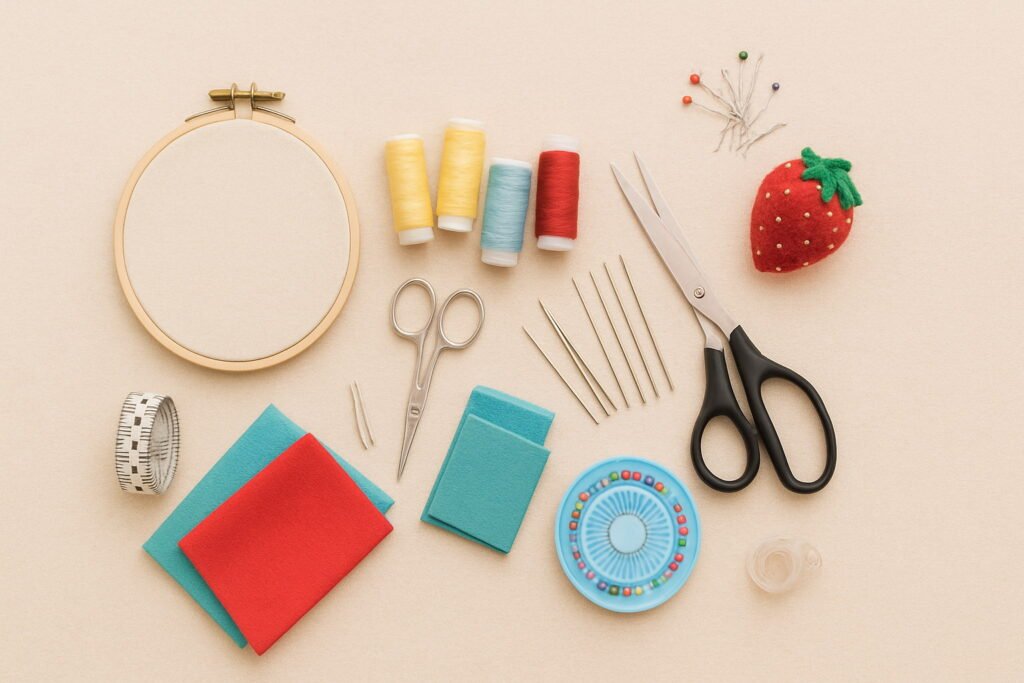
| Item | Purpose |
| Leftover linen fabric | Main art element |
| Canvas board or wooden frame | Structure and support |
| Fabric glue or staple gun | Secures linen to surface |
| Scissors or rotary cutter | Clean fabric edges |
| Ruler or measuring tape | Accurate sizing |
Optional Creative Tools (For Variations)
- Acrylic paint or fabric dye (neutral or earth tones)
- Needle and thread/embroidery floss
- Charcoal pencil for sketches
- Twine, wire, or thin wood slats for texture
- Pressed leaves or dried flowers
These optional items allow you to customize while still maintaining a true minimalist look.
Pro tip: Stick with a maximum of two colors and one texture addition to preserve the minimalist aesthetic.
Recommended Linen Sizes
Use a variety of scrap sizes to create balance:
| Wall Space Size | Ideal Fabric Dimensions |
| Small wall (entry/studio) | 8×10 or 12×16 inches |
| Medium wall (bedroom) | 16×20 or 18×24 inches |
| Large wall (living area) | 24×36 or gallery trio |
This helps ensure proper visual weight and harmony in your space.
Choosing a Minimalist Design Style for DIY Minimalist Wall Art Using Leftover Linen
Minimalism is not “empty” — it is intentional simplicity. Before you touch your fabric or frame, choosing the right design direction will define the overall emotion of your finished piece. The beauty of DIY minimalist wall art using leftover linen lies in its quiet visual language and thoughtful restraint.
Minimalist Design Concepts That Work Perfectly with Linen
Because linen has an organic, imperfect texture, it pairs best with designs that feel calm, natural, and refined instead of sharp and busy.
1. Abstract Line Art
Simple lines on textured linen make a powerful statement.
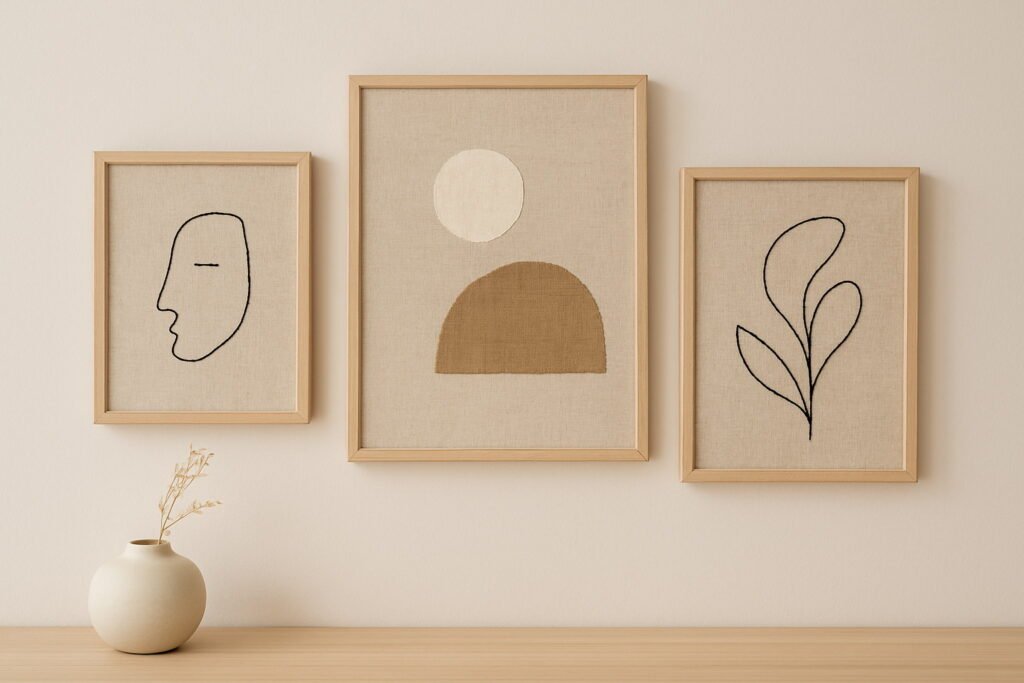
- One continuous, flowing line
- Thin black or charcoal strokes
- Human form, plant form, or abstract wave shape
- Works beautifully on off-white or beige linen
2. Geometric Simplicity
Minimal shapes create visual balance and order.
| Shape | Mood Created |
| Circle | Calm & unity |
| Triangle | Balance & movement |
| Square | Stability & structure |
| Arch | Soft architectural feel |
Use only one or two shapes per piece for a true minimalist effect.
3. Organic Natural Forms
Inspired by nature, these designs echo simplicity and harmony.
- Soft silhouettes of leaves
- Abstract mountains or dunes
- Horizon lines
- Lunar and sun shapes
4. Monochrome vs. Earth Tones
For minimalist design, the color decision is critical.
| Palette | Best For |
| Black + linen | Modern, bold minimalism |
| White on beige | Soft, airy, Scandinavian |
| Earth tones (clay, sage, sand) | Warm, organic interiors |
| Grey + charcoal | Industrial minimalism |
“In minimalist design, color isn’t decoration — it is structure.”
How to Choose the Right Style for Your Space
Ask yourself these questions:
- Is my space cool-toned or warm-toned?
- Do I want calm or contrast on this wall?
- Will this art be a focal point or a supporting piece?
Quick guide:
- Bedroom → Organic & soft-toned
- Office → Geometric & monochrome
- Living room → Abstract & large-scale
- Hallway → Small linen gallery set
Minimalism is not about trends. It’s about removing the unnecessary and letting your walls breathe.
Preparing Your Linen for Wall Art
A beautiful result begins with proper preparation. Skipping this step can lead to wrinkles, uneven tension, and fragile edges that ruin an otherwise perfect piece of DIY minimalist wall art using leftover linen.
Step One: Wash & Dry Carefully
Even leftover linen needs attention. Linen naturally shrinks around 3–5% after washing.
Best practice
- Wash in cold water
- Use mild detergent only
- Air-dry flat or tumble dry on low heat
This process softens fibers while preserving strength.
Step Two: Iron for a Clean Canvas
Wrinkles can interfere with design and mounting.
- Iron while slightly damp
- Use a medium/high heat setting
- Always iron the backside first
A smooth fabric instantly creates a more professional result.
Step Three: Cut and Size
Use sharp scissors or a rotary cutter for crisp edges.
| Frame Size | Cut Linen Size |
| 8×10″ | 10×12″ (for wrapping) |
| 16×20″ | 18×22″ |
| 24×36″ | 26×38″ |
Add 2 inches on each side so you can stretch or fold the edges neatly.
Step Four: Control the Fray
Linen frays easily — which can look beautiful or messy.
Choose your style:
- Clean look → Fold edges inward + glue/staple
- Organic look → Let light fraying happen
- Stitched edge → Simple running stitch around border
Pro tip: A thin line of clear fabric glue at the cut edge prevents excessive shedding without hardening the look.
Design Ideas for DIY Minimalist Wall Art Using Leftover Linen
This is where imagination meets simplicity. Each of these ideas is designed to stay pure, quiet, and visually balanced — the foundation of true minimalist art.
1. Stitched Minimal Lines
A needle and simple black thread can create stunning, tactile art.
Ideas include:
- One curved line across the center
- Abstract face outline
- Mountain range silhouette
- Simple botanical stem
Stitch style recommendation: Running stitch or backstitch only (keep it simple).
2. Painted Brush Expressions
Just one or two strokes is often enough.
| Brush Stroke | Emotional Effect |
| Horizontal | Calm & grounded |
| Vertical | Strength & growth |
| Circular | Balance & flow |
| Diagonal | Movement & change |
Use diluted acrylic paint for a natural, faded effect that blends into the linen.
3. Layered Linen Forms
Stack small linen pieces onto a base linen background.
Examples:
- Soft-edged squares in varying sizes
- Overlapping circles
- Fabric “hills” stacked at bottom
Use fabric glue in small amounts so the texture stays natural and soft.
4. Pressed Natural Elements (Eco-Minimalism)
Pressed leaves or wildflowers under sheer linen look organic and refined.
Great options include:
- Ferns
- Baby’s Breath
- Eucalyptus leaves
- Lavender stems
Sandwich them between backing and linen. The effect is subtle, refined, and deeply rooted in nature.
Case Insight:
Interior stylists report that organic minimalist art increases perceived calm in a space by up to 40% due to its neutral textures and natural symbolism.
Visual Balance Rule
For perfect minimalist composition:
- 70% empty space
- 30% design element
This negative space is what gives your piece its power.
Step-by-Step: Creating DIY Minimalist Wall Art Using Leftover Linen
This is the hands-on core of the process. Keep your workspace clean, quiet, and uncluttered — a calm environment leads to better design decisions and a more mindful finished piece.
Step 1: Set Your Creative Intention
Before touching the fabric, decide what your artwork is meant to communicate:
- Calm
- Balance
- Movement
- Nature
- Stillness
Write one word on a piece of paper and place it in front of you. Every design decision should support that word.
Minimalist art works best when it starts with purpose, not decoration.
Step 2: Measure, Cut and Align
Use this table as a quick reference for clean proportion:
| Frame/Canvas Size | Linen Size to Cut | Border Allowance |
| 8 x 10 in | 10 x 12 in | 2 in per side |
| 16 x 20 in | 18 x 22 in | 2 in per side |
| 24 x 36 in | 26 x 38 in | 2 in per side |
Lay the linen on a flat surface and line up the frame on top. Make light pencil marks and trim accordingly.
Keep edges straight. Uneven cuts draw attention in minimalist design.
Step 3: Create the Design
Choose ONE method only. Minimalism does not mix techniques in one piece.
Option A – Stitching
- Thread your needle with black, beige, or white thread
- Keep stitches between 0.5–1 cm
- Lightly sketch guide lines in pencil, then stitch over them
Option B – Painting
- Use a thin flat brush
- Apply only one to three strokes
- Leave drying time between layers
Option C – Layering
- Glue a secondary linen shape onto the base fabric
- Press with a book for 1–2 hours until dry
Tip:
If you think it needs “just one more detail,” it usually doesn’t.
Step 4: Mount the Linen
You now attach your linen to the canvas or frame.
For canvas/backboard:
- Place linen face-down
- Center the board on top
- Fold each side inward
- Secure with fabric glue or staple gun, pulling gently for tension
For wooden frames (without backing):
- Stretch linen over the front
- Staple lining at back
- Trim excess
Your surface should be taut, smooth, and quiet — no bubbles or ripples.
Step 5: Final Inspection (Minimalist Rule Check)
Before hanging your artwork, confirm:
✅ No wrinkles
✅ No excess glue
✅ Balanced negative space
✅ Design readable from 6 feet away
This “distance check” is used by professional installation artists and ensures your piece reads visually from across a room.
Advanced & Creative Variations of DIY Minimalist Wall Art Using Leftover Linen
Once you’re comfortable with basic designs, these elevated variations add depth while preserving simplicity.
Texture-Based Variations
Texture creates interest without adding visual clutter.
- Frayed linen edges (soft and organic)
- Linen layered over rough wood
- Subtle stitched texture patterns
- Crumpled texture pressed flat
Each adds tactile complexity without visual noise.
Natural Dye Technique
You can naturally dye linen using kitchen or garden materials:
| Natural Ingredient | Resulting Tone |
| Coffee grounds | Warm tan |
| Turmeric | Soft yellow |
| Red onion skins | Dusty pink |
| Avocado pit | Blush/neutral rose |
This creates muted, earthy colors perfect for minimalist interiors.
Fun fact: Natural dyes bond beautifully with linen because of its porous flax fibers, creating longer-lasting tones than on synthetic fabrics.
Minimalist Mixed Media
Add one additional element only:
- Copper wire in straight line
- Wooden dowel top bar
- Handmade paper strip
- Thin tree branch
Use a limit of 1 material + linen only for high-end minimalism.
Quote Alternative Without Visible Words
Instead of writing text, use a symbolic shape to represent an idea.
| Emotion | Minimal Symbol |
| Peace | Single horizontal line |
| Love | Soft circle |
| Growth | Vertical rising line |
| Balance | Two parallel lines |
This communicates meaning without breaking the minimalist code.
Styling Tips for Displaying Your DIY Minimalist Wall Art Using Leftover Linen
How you display your art determines its final impact. Placement is design.
Single Statement Display
Best use:
- Large linen piece (24×36)
- Centered above couch, bed, or desk
- Neutral wall behind it
Height rule:
Art center should sit 57–60 inches from the floor (gallery standard)
Minimalist Gallery Wall
Use 3–5 pieces maximum. Keep spacing equal:
| Pieces | Spacing Between |
| 2–3 | 4–6 inches |
| 4–5 | 6–8 inches |
Use same linen color and frame type for cohesion.
Perfect Pairings for Linen Wall Art
These materials enhance the look:
- Light wood furniture
- Stone or clay décor
- Soft wool or cotton textiles
- Neutral-toned ceramics
Combined, these create a calm, grounded, modern aesthetic.
Lighting Makes the Difference
Aim for soft, diffused lighting:
- Side light to highlight texture
- Warm bulbs (2700–3000K)
- No harsh white light
The texture of linen becomes more visible in natural or warm ambient light, increasing depth and visual softness.
Interior stylists recommend textured wall art in neutral tones to reduce visual fatigue and deepen relaxation in personal spaces.
Common Mistakes to Avoid When Making DIY Minimalist Wall Art Using Leftover Linen
Minimalism is powerful, but it’s also unforgiving. Every choice matters. A small mistake that might be hidden in busy artwork becomes very visible in minimalist design. Avoiding these common errors will instantly raise the quality level of your DIY minimalist wall art using leftover linen.
Overcomplicating the Design
The most frequent mistake is adding too much.
Minimalist art should include:
- One main idea
- One focal point
- Maximum two colors
Avoid:
- Too many stitches
- Multiple quote elements
- Pattern overload
- Random paint splashes
If it doesn’t add meaning, it adds noise.
Incorrect Fabric Tension
Loose linen ruins the finished look.
Signs of poor tension:
- Wrinkles on surface
- Sagging center over time
- Uneven edges on frame
Solution:
- Pull linen gently but firmly
- Secure all four sides evenly
- Check both front and sides before final fastening
According to DIY framing standards, properly stretched fabric should have less than 2 mm of visible distortion across the surface.
Choosing the Wrong Frame or Backing
The frame is not just a container — it is part of the artwork.
Best frame types for linen art:
| Frame Material | Visual Effect |
| Light wood (oak, pine) | Warm and organic |
| Matte black | Modern and structured |
| Frameless canvas | Pure minimalism |
| Thin metal | Industrial simplicity |
Avoid thick, glossy, ornate frames — they clash with the softness of linen.
Ignoring Balance & Negative Space
Minimalist art depends on visual breathing room.
If your design touches:
- All edges
- All corners
- Multiple focal points
…it is no longer minimalist.
Remember: 70% empty space + 30% detail = visual harmony.
Place your design on the linen using the “rule of thirds” to create natural balance.
Care and Maintenance of Linen Wall Art
Linen is strong, but like all natural fibers, it requires mindful care. Proper maintenance ensures that your handmade DIY minimalist wall art using leftover linen stays beautiful for years.
How to Clean Linen Wall Art Safely
Never use water or cleaning sprays directly on the fabric.
Follow this routine instead:
- Use a soft, dry microfiber cloth
- Dust gently every 2–3 weeks
- For deep texture, use a low-power vacuum with brush head
Avoid paper towels — they can snag fibers.
Protect It from Environmental Damage
Here’s how to preserve your artwork’s life span:
| Threat | Prevention |
| Sunlight (UV rays) | Display away from direct windows |
| Moisture | Keep in dry, ventilated areas |
| Heat | Avoid near radiators, heaters |
| Dust | Use glass frame if needed |
Excessive sunlight can fade natural dyes and weaken fibers in as little as 6–12 months if unprotected.
Proper Storage Tips
If you rotate your wall art seasonally:
- Wrap in acid-free paper
- Store flat, not rolled
- Add silica gel packets for moisture control
- Keep in a dark, cool cupboard
With good care, linen-based art can last decades without degradation.
Conclusion: Embrace Simplicity with DIY Minimalist Wall Art Using Leftover Linen
In a world full of noise, clutter, and constant visual stimulation, DIY minimalist wall art using leftover linen offers relief. It is quiet. It is intentional. It is human.
This craft is more than decoration — it is a mindset shift:
✅ You reduce waste
✅ You connect with your space
✅ You create with intention
✅ You slow down
✅ You make something truly yours
Whether you create a single calming piece or an entire linen gallery wall, each work becomes a reflection of your values: simplicity, sustainability, and mindful beauty.
Minimalism is not about having nothing. It is about making room for what matters most.
If you’d like to explore more about sustainable textile practices and fabric waste reduction, the Ellen MacArthur Foundation offers reliable global insight into circular design and material responsibility: https://ellenmacarthurfoundation.org