Every successful embroidery or sewing project begins with the right set of tools. When you work with quality supplies, you not only improve accuracy but also enjoy a smoother, more enjoyable creative process. Understanding which items are genuinely essential—and why they matter—helps beginners avoid frustration and allows experienced makers to refine their craft even more.
Today’s creative world offers endless options, from simple hand-sewing needles to advanced cutting tools and specialty embroidery frames. This guide breaks down the must have supplies for embroidery and sewing projects using a clear and practical structure. You’ll discover how each tool works, what to look for when buying, and how choosing the right materials influences your final outcome. Whether you’re stitching a delicate floral design or constructing a garment from scratch, the correct supplies make all the difference.
This article also includes checklists, a comparison table, expert quotes, and real examples to help you build a toolkit that’s reliable, functional, and budget-friendly.
In This Article
Basic Tools: Must Have Supplies for Embroidery and Sewing Projects
A solid toolkit forms the foundation of every sewing or embroidery setup. These are the items you’ll reach for every single time you start a project.
Essential Tools Every Maker Needs
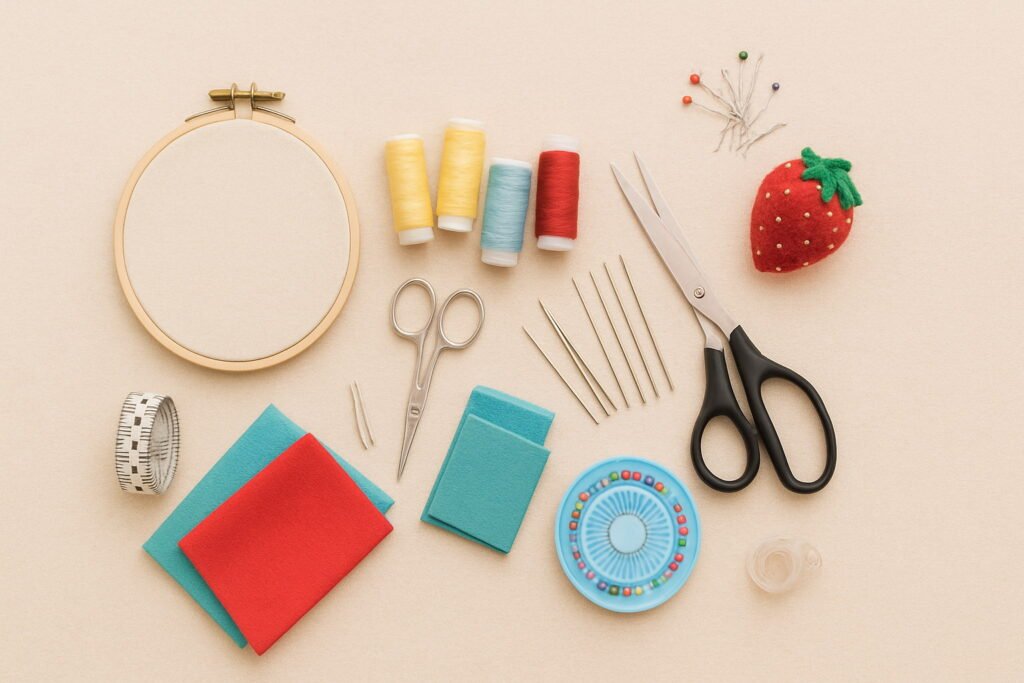
- Embroidery hoops and frames – These keep your fabric taut, preventing puckering and distortion. Wooden hoops offer a classic feel, while plastic hoops grip more firmly.
- Sewing needles – Hand-sewing needles come in different types such as sharps, betweens, and chenille needles. For machine sewing, keep a range of sizes from 70/10 to 100/16.
- Thread varieties – Cotton thread is ideal for natural fabrics, polyester for stretchy or synthetic fabrics, and embroidery floss for detailed stitching.
- Fabric scissors – A separate pair exclusively for fabric preserves sharpness and prevents frayed cuts.
- Thread snips – These small cutters make quick trimming easy and precise.
- Pins and clips – Glass-headed pins are heat-safe, while quilting clips are perfect for thick fabrics.
- Pin cushions – Traditional tomato cushions or magnetic dishes help keep pins organized.
Expert Insight
A professional tailor once shared:
“You don’t need a hundred tools, just the right ones. Sharp scissors, reliable needles, and good thread solve more sewing problems than anything else.”
Quick Comparison Table
| Tool | Best Use | Recommended For | Notes |
| Fabric Scissors | Cutting fabric cleanly | All skill levels | Keep them away from paper |
| Embroidery Hoops | Stabilizing fabric | Embroidery projects | Choose size based on design |
| Glass-Head Pins | Pinning fabrics | Sewing garments | Heat resistant during ironing |
| Polyester Thread | Sewing stretch fabrics | Clothing makers | Stronger than cotton |
Mini Case Study: The Difference Good Tools Make
A hobbyist embroiderer upgraded from cheap plastic needles and thread to mid-range, high-quality supplies. Her stitches immediately appeared smoother, knots reduced by 70%, and project time decreased significantly. This simple change reinforced the value of investing in dependable essentials.
Fabric Essentials as Must Have Supplies for Embroidery and Sewing Projects
Fabric selection influences how your stitches behave, how garments drape, and how durable the finished product becomes. Understanding the characteristics of different fabrics ensures you start each project on the right foundation.
Popular Fabrics for Embroidery
- Linen – Strong, breathable, and ideal for detailed designs.
- Cotton – Beginner-friendly and widely available.
- Canvas – Sturdy and perfect for bold motifs or tote bags.
- Evenweave fabrics – Ideal for counted thread embroidery like cross-stitch.
Fabrics Commonly Used in Sewing
- Woven fabrics – Great for shirts, skirts, and structured garments.
- Knit fabrics – Best for stretch garments such as T-shirts or leggings.
- Interfacing – Provides stability to collars, cuffs, waistbands, and bags.
How to Choose the Right Fabric
- Match stretch fabrics with stretch thread and appropriate needles.
- For embroidery, choose fabric tight enough to hold stitches but soft enough for needle penetration.
- Always test a few stitches on a fabric scrap first.
Fabric Preparation Checklist
- Pre-wash to prevent shrinking
- Press to remove folds or deep creases
- Cut away fraying edges
- Mark the grainline before cutting patterns
A well-prepared fabric behaves predictably during stitching, improving the overall finish.
Cutting Tools and Measuring Supplies
Accuracy is one of the pillars of successful embroidery and sewing work. Cutting tools and measuring supplies ensure your pieces align correctly, your patterns stay consistent, and your fabric behaves as expected throughout the project. When your cuts are clean and your measurements are precise, your stitching becomes smoother and your final results look far more professional.
Essential Cutting Tools
- Rotary cutters – Perfect for long, straight cuts and ideal for quilters or anyone who works with multiple layers. Blade sizes typically range from 28 mm to 60 mm.
- Cutting mats – Self-healing mats protect your blades and work surfaces. A 24×36 inch mat is versatile for most home studios.
- Tailored fabric shears – High-quality shears glide through fabric without snagging and maintain sharpness longer than craft scissors.
- Thread snips – A must-have for trimming thread ends quickly without lifting the fabric.
Measuring Supplies That Ensure Accuracy
- Tailor’s chalk or washable markers – Useful for marking cutting lines, darts, or embroidery placement.
- Tape measures – Flexible and suitable for curved measurements like necklines and waistlines.
- Seam gauges – Essential for checking small, repetitive measurements such as hems and seam allowances.
- Acrylic rulers – Perfect for rotary cutting and maintaining straight edges.
Pro Tip
“Nine out of ten sewing mistakes come from poor measuring—not poor stitching.”
Comparison Table: Measuring Tools
| Item | Best Feature | Ideal For | Tip |
| Seam Gauge | Small, precise readings | Hemming, seam allowances | Choose one with a slider |
| Acrylic Ruler | Durable, clear grid | Rotary cutting | Look for non-slip backing |
| Tape Measure | Flexibility | Garment sewing | Replace stretched tapes yearly |
Whether you’re tracing applique shapes or checking the spacing for embroidery motifs, these tools bring consistency to your craft and reduce errors significantly.
Threads, Floss, and Needles for Professional Results
Choosing the correct threads and needles has a direct impact on how your stitches look and how durable they will be. Threads carry your design, and needles act as your main stitching partner, so investing in the right types ensures smooth performance and cleaner finishes.
Understanding Different Thread Types
- Embroidery floss – Usually made of six strands, allowing you to adjust thickness. Perfect for detailed hand embroidery.
- Cotton sewing thread – Works best on natural fibers like linen and cotton.
- Polyester thread – Strong and slightly stretchy, making it ideal for clothing or mixed fabrics.
- Metallic thread – Adds shimmer but can be fragile; works best with a thread conditioner.
Choosing the Right Needle
- Chenille needles – Sharp points and large eyes, excellent for embroidery floss or ribbon work.
- Sharps – Good all-purpose hand-sewing needles.
- Embroidery needles – Designed with larger eyes to handle multiple strands of floss.
- Machine needles – Sizes range from 60/8 (fine fabrics) to 110/18 (heavy materials). Specialty versions include stretch, denim, and microtex.
Signs You’re Using the Wrong Needle
- Snagging or tearing fabric
- Thread shredding or breaking
- Skipped stitches (for machine sewing)
- Visible holes around stitch points
Thread and Needle Care Tips
- Store thread in a dry area to prevent brittleness.
- Replace needles frequently—many experts recommend after every 6–8 hours of sewing.
- Keep metallic or delicate threads in sealed bags for protection.
Quick Table: Needle & Thread Pairings
| Fabric Type | Best Thread | Best Needle | WHY |
| Linen | Cotton/Floss | Embroidery or Chenille | Strong fabric needs sharp needle penetration |
| Knit Fabrics | Polyester | Stretch Needle | Allows fabric to stretch without breaking stitches |
| Denim | Heavy Polyester | Denim Needle | Reinforced needle prevents breakage |
| Sheer Fabrics | Lightweight Cotton | Microtex Needle | Fine tip avoids holes |
Correct pairing helps prevent tension issues, weak seams, and inconsistent stitch quality.
Essential Notions and Accessories
Notions may seem small, but they play a major role in your workflow and project quality. These accessories help make your work easier, cleaner, and more enjoyable.
Must-Have Notions for Everyday Projects
- Seam rippers – Every maker needs one. They rescue mistakes and help remove unwanted stitches cleanly.
- Thimbles – Useful for protecting fingers during hand sewing or pushing needles through thick fabrics.
- Needle threaders – Especially helpful with fine needles or low-light environments.
- Bobbins – Keep extra bobbins pre-wound for efficient machine sewing.
Stabilizers and Interfacing
Stabilizers add structure to embroidery and prevent fabric from stretching or puckering.
Common types include:
- Cut-away stabilizers – Best for detailed embroidery.
- Tear-away stabilizers – Good for simple designs.
- Fusible stabilizers – Iron-on versions that make lightweight fabrics more stable.
Useful Accessories
- Storage containers – Keep small notions sorted by type. Clear drawers or multi-compartment boxes work well.
- Magnetic pin holders – Reduce the chance of losing pins on the floor.
- Fabric glue or fusible web – Helps with appliqué, hemming, or securing small decorative elements.
Notion Care Tips
- Replace worn-out seam rippers to keep cuts clean.
- Avoid overfilling storage bins to prevent bending or damaging small tools.
- Label stabilizers or interfacing to avoid mixing them up.
Essentials like these streamline your workflow, help avoid common mistakes, and ensure your embroidery or sewing projects remain neat, stable, and long-lasting.
Tools for Precision and Finishing
Finishing tools play a major role in enhancing the overall appearance of embroidery and sewing projects. They help refine edges, smooth seams, and give your work a crisp, polished look that stands out. Precision tools also make the process easier, especially when working on detailed or delicate pieces.
Pressing Tools That Improve Quality
- Iron – A reliable iron is essential. Pressing is not the same as ironing; pressing sets stitches and shapes fabric without stretching it.
- Ironing board – A stable surface ensures even heat distribution across fabric.
- Tailor’s ham – Designed to press curved areas like shoulders and darts.
- Seam rollers – Perfect for quick presses on small seams or appliqué pieces.
Finishing Supplies Worth Having
- Fray check – Prevents raw edges from unraveling, especially around buttonholes or dense embroidery.
- Fabric glue – Useful for appliqué and attaching embellishments.
- Finishing sprays – Starch or fabric setting sprays add structure and crispness.
Blocking and Stretching Tools for Embroidery
Blocking helps squared embroidery pieces lay flat and maintain their shape. Common tools include:
- Blocking mats – Typically foam, allowing easy pin placement.
- Rust-proof pins – Prevent stains on damp fabric.
- Water spray bottle – Light misting helps fibers relax.
Professional Insight
“Finishing is where a project transforms from homemade to hand-crafted. The tools don’t just help—they elevate the entire piece.”
With the right finishing supplies, your projects maintain their shape, structure, and visual appeal long after completion.
Must Have Supplies for Embroidery Specific Projects
Embroidery requires specialized tools that enhance precision, support decorative stitches, and maintain fabric stability. These supplies help create clean designs and detailed textures, whether you’re working on floral motifs or intricate lettering.
Embroidery Transfer Tools
How you transfer your design often determines stitch accuracy. Popular transfer methods include:
- Heat-transfer pens – Transfer printed designs with gentle heat.
- Carbon transfer paper – Creates clear outlines on most fabric types.
- Water-soluble pens – Ideal for temporary markings that wash away easily.
Specialty Embroidery Hoops and Frames
- Q-snaps – Provide even tension and prevent fabric creasing.
- Stretcher bars – Best for larger, more detailed projects.
- Flexi-hoops – Great for decorative finishing.
Needles for Unique Embroidery Styles
- Crewel needles – Perfect for wool embroidery.
- Beading needles – Extremely fine and flexible.
- Ribbon embroidery needles – Wider eyes to accommodate silk ribbon.
Lighting and Magnification
Good lighting reduces eye strain and enhances accuracy:
- LED craft lamps – Bright, energy-efficient, and adjustable.
- Magnifying glasses or lamps – Essential for detailed stitches or fine fabrics.
Case Study: Beginner to Expert Upgrade
A beginner started with basic hoops and inexpensive needles. After switching to Q-snaps and higher-quality embroidery needles, her stitch tension improved noticeably. The edges of her motifs became smoother, and she experienced fewer thread splits—proof that the right embroidery-specific tools directly impact stitch clarity.
Must Have Supplies for Sewing Specific Projects
Sewing projects rely on tools designed for speed, efficiency, and structural accuracy. Whether you sew clothing, accessories, or home décor, these supplies keep your work clean and consistent.
Sewing Machine Essentials
- Machine needles – Keep a full variety: universal, stretch, denim, microtex.
- Presser feet – Standard, zipper foot, walking foot, and buttonhole foot are core essentials.
- Extra bobbins – Wind several before you start a large project.
- Machine oil and brushes – Help maintain smooth movement and prevent lint buildup.
Pattern Tools
Patterns shape your entire project, so having the right accessories helps ensure proper results.
- Pattern weights – Keep paper patterns in place without distortion.
- Tracing paper – Allows you to preserve original patterns while making duplicates.
- French curve rulers – Perfect for drawing smooth sleeve caps, necklines, and waistlines.
Closures and Fasteners
Different projects require different finishing components:
- Zippers – Invisible, nylon coil, and metal zippers for various garments.
- Buttons – Wooden, plastic, metal, or fabric-covered.
- Elastic – Wide elastic for waistbands or narrow elastic for cuffs.
- Bias tape – Ideal for binding raw edges neatly.
Fabric Handling Tools
- Point turners – Perfect for crisp corners on collars and pockets.
- Loop turners – Make straps and ties easier to turn inside out.
- Pressing cloths – Protect delicate fabrics from heat.
Quote from a Dressmaker
“If you want your garments to fit well and last long, your machine tools matter just as much as your stitching technique.”
These essential sewing-specific supplies ensure your garments and accessories come together accurately, securely, and beautifully.
Optional Upgrades That Improve Workflow
Once you’ve built a solid foundation of must have supplies for embroidery and sewing projects, upgrading your workspace with a few optional additions can dramatically improve your speed, accuracy, and comfort. These tools aren’t required for beginners, but they can help intermediate and advanced makers work more efficiently and enjoyably.
Storage and Organization Upgrades
- Rolling craft carts – Perfect for small spaces and easy access to frequently used tools.
- Thread racks – Keep colors visible and prevent tangling or dust accumulation.
- Drawer organizers – Sort needles, clips, chalk, and bobbins so you can find them quickly.
Digital Tools
- Printable patterns – Convenient and easy to store digitally.
- Pattern drafting apps – Help adjust measurements with precision.
- Embroidery design software – Allows you to customize motifs before stitching them.
Specialized Presser Feet
These small upgrades can completely transform sewing accuracy:
- Walking foot – Ensures even feeding for quilting or slippery fabrics.
- Edge-stitch foot – Helps create clean, straight stitches along edges.
- Overcast foot – Mimics serged edges without needing a serger.
Comfort and Productivity Enhancers
- Ergonomic seam rippers – Reduce hand strain during long projects.
- Anti-fatigue mats – Perfect for standing cutting tables.
- Portable ironing stations – Minimize back-and-forth movement across the room.
These optional tools are excellent additions once you know your preferred sewing or embroidery style and want to optimize your workspace.
Budget Tips for Building Your Supply Kit
Crafting doesn’t have to be expensive. With thoughtful choices, you can assemble a high-quality collection of must have supplies for embroidery and sewing projects without overspending. Smart planning ensures you get the best value while avoiding unnecessary purchases.
Prioritize Essential Tools First
- Invest in high-quality scissors, needles, and thread—these impact your results the most.
- Start with a basic hoop set instead of buying multiple sizes immediately.
- Buy a simple, sturdy seam ripper and upgrade later only if needed.
Affordable Alternatives
- Use binder clips in place of sewing clips for thicker fabrics.
- Repurpose glass jars for thread storage.
- Opt for fabric remnants when practicing new stitches or sewing techniques.
Smart Buying Strategies
- Buy thread, stabilizers, or batting in bulk to save money.
- Check secondhand shops for cutting mats or dress forms.
- Wait for seasonal sales—many craft stores offer major discounts during January, July, and holiday seasons.
Budget Case Study
A beginner who initially wanted to buy everything at once trimmed her list down to 12 must-have items and saved over 50% of her planned budget. By focusing on quality over quantity, she avoided duplicate tools and gradually upgraded over time—resulting in a more functional, clutter-free toolkit.
Conclusion and Final Checklist
Building a well-rounded collection of must have supplies for embroidery and sewing projects ensures your creative journey is smoother, more enjoyable, and more productive. With the right tools at hand—and a clear understanding of how each one supports your craft—your projects look more polished, your workflow becomes more efficient, and your confidence grows.
To help you get started, here’s a quick checklist summarizing the essentials from this guide.
Final Checklist: Core Supplies You Should Have
For Both Embroidery & Sewing
- High-quality fabric scissors
- Thread snips
- Needles (hand and machine)
- Pins or clips
- Measuring tape and seam gauge
- Thread in various types
- Iron and ironing board
Embroidery-Specific Tools
- Hoops or frames
- Embroidery floss
- Transfer tools
- Stabilizers
- Specialty needles
Sewing-Specific Tools
- Sewing machine essentials
- Presser feet
- Patterns and tracing paper
- Zippers, buttons, and fasteners
- Loop turners and point turners
Final Note
Develop your toolkit gradually, choosing tools that genuinely support your style of creating. High-quality supplies last longer, improve your results, and bring more joy to your craft. To expand your knowledge even further, consider exploring additional tutorials and technique guides, such as those available at the American Sewing Guild — a trusted resource for sewing education and community support. https://www.asg.org